What to drink in Maipo Valley: a guide to Chilean wine
Cabernet Sauvignon is the star of the Maipo Valley, but not the only wine to try. The Chilean reds, blends and lesser-known grapes to look for on a Maipo wine tour.
If you drink only one wine in the Maipo Valley, make it Cabernet Sauvignon. Maipo is one of the historic heartlands of Chilean wine and is famous above all for structured, age-worthy Cabernet grown between the Andes and Chile’s Coastal Range. Stopping at Cabernet would miss part of the story, though. A good Maipo tasting might take you from a bright, fruit-driven Cabernet to a serious single-vineyard bottling, then on to spicy Carménère, Syrah, Merlot and a Cabernet-led blend in the Bordeaux style.
For first-time visitors, this is the easiest way to think about Maipo wine:
- Must try: Cabernet Sauvignon
- Also look for: Carménère, Syrah and Merlot
- For something more serious: Cabernet-led red blends
- For collectors: Alto Maipo and Puente Alto Cabernet
- Prefer white wine? Chardonnay and Sauvignon Blanc are made here, but Maipo’s real strength is red wine
To taste Maipo Cabernet at several levels in one sitting, the Marqués de Casa Concha tasting at Concha y Toro below ends in a private room with six super-premium Marqués de Casa Concha wines and four premium wines. If you are still choosing an estate, start with the best wineries in Maipo Valley.
Check Availability
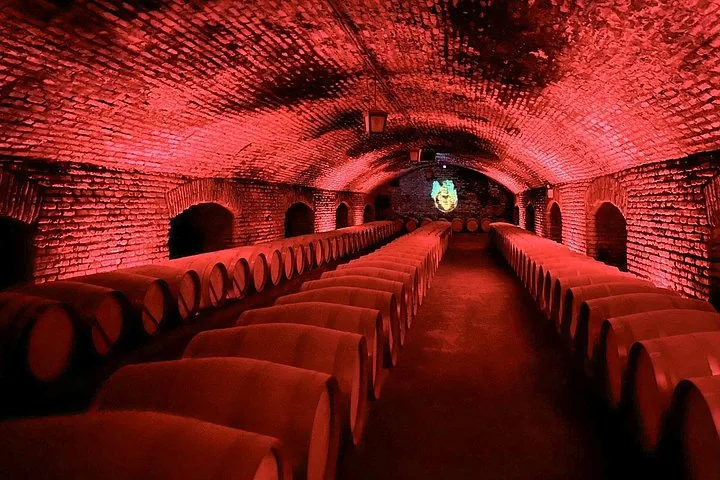
Marqués de Casa Concha Tasting at Concha y Toro from Santiago
- 4.9/5 (1,223 reviews)
- 5 hours
- Free cancellation
- Operated by Turistik
Includes Round-trip bus transfer — from your chosen meeting point (Plaza de Armas, Av. Vitacura in Las Condes, or Parque Arauco) …
You'll choose your date and complete the booking on Viator. Free cancellation up to 24 hours before departure.
Same ride, also on GetYourGuide
From $135 per person · ★ 4.7 from 92 GetYourGuide reviews
Each platform sets its own price and collects its own reviews, so compare both before you book on Viator.
The short answer: what wine is Maipo Valley famous for?
Maipo Valley is best known for Cabernet Sauvignon. It is not only the grape most associated with the region but also its most widely planted major variety. Wines of Chile lists about 5,517 hectares of Cabernet Sauvignon in Maipo, against about 890 hectares of Merlot, 869 hectares of Syrah and 709 hectares of Carménère.
Chile’s official tourism board describes Maipo as the cradle of Chilean Cabernet Sauvignon, and Wines of Chile singles out the valley’s complex Cabernet with structured tannins as its defining style. That makes the choice unusually simple:
If this is your first Maipo Valley wine tasting, start with Cabernet Sauvignon.
Then use Carménère, Syrah and the blends to see how much broader the valley can be.
Maipo Valley wine at a glance
| Wine | How important in Maipo? | Typical character | Who should try it? |
|---|---|---|---|
| Cabernet Sauvignon | The signature grape | Blackcurrant, red and black fruit, herbs, cedar, firm tannin | Everyone |
| Cabernet-led blends | One of Maipo’s premium strengths | Layered fruit, spice, structure, polished tannins | Serious wine lovers |
| Carménère | An important second red | Dark fruit, spice, herbal notes, softer texture | Anyone wanting a distinctly Chilean grape |
| Syrah | Increasingly interesting | Dark fruit, pepper, spice, savory notes | Shiraz and Syrah drinkers |
| Merlot | A traditional supporting variety | Plush fruit, softer tannins | People who prefer gentler reds |
| Cabernet Franc | Usually seen in blends | Herbal, floral and savory lift | Wine enthusiasts |
| Petit Verdot | Usually a blending grape | Color, spice and structure | Blend fans |
| Chardonnay | Present but not defining | Depends strongly on the site and the winemaking | White-wine drinkers |
| Sauvignon Blanc | Present, but not Maipo’s main draw | Fresh, citrus-driven styles are possible | Visitors who do not drink red |
Other Experiences
Other experiences you might enjoy
More Maipo Valley wine tours, each with its own page and booking link.

Why is Maipo Valley so good for Cabernet Sauvignon?
Maipo’s reputation is partly a matter of geography. The valley stretches from vineyards close to the Andean foothills toward the Coastal Range, and the climate is broadly Mediterranean, with hot, dry summers and cool, wetter winters. In the eastern part of the valley, altitude and the closeness of the Andes matter most.
At Puente Alto, one of Maipo’s most celebrated Cabernet areas, Almaviva describes poor, stony alluvial soils, a cool mountain influence and large differences between day and night temperatures. Those conditions let the grapes ripen while keeping their freshness and acidity, and they help explain why many of Chile’s most ambitious Cabernet-based wines come from this side of the valley.
What does Maipo Cabernet Sauvignon taste like?
There is no single flavor profile, but a classic Maipo Cabernet may show:
- blackcurrant or cassis
- blackberry and other dark fruit
- red fruit in fresher styles
- cedar
- tobacco
- pepper or dried herbs
- an occasional minty or eucalyptus-like note
- firm but increasingly polished tannins
A Cabernet from Pérez Cruz’s Maipo Andes vineyards, for example, is described with red and black fruit, cassis, pepper and eucalyptus alongside vibrant acidity and robust tannins. At the luxury end, Almaviva describes its Puente Alto wines as combining fresh fruit with cedar, tobacco and earthy, savory notes. The common thread is structure more than simple fruitiness: good Maipo Cabernet is made for food and, in its more serious forms, for aging. Our guide to Chilean Cabernet Sauvignon goes deeper into the soils, Puente Alto and the icon wines.
Cabernet Sauvignon: the wine not to leave Maipo without
If you are choosing between several tastings at a winery, pick one that lets you compare at least two levels of Cabernet Sauvignon, for example:
- an entry-level or Reserva Cabernet
- a single-vineyard or Gran Reserva Cabernet
- the winery’s icon Cabernet or premium blend
That tells you far more about Maipo than three unrelated grapes. You can see how Cabernet changes with the vineyard’s location, the age of the vines, the grape selection, the oak aging, the blending and the time in bottle.
If you normally drink Bordeaux
Maipo should feel familiar straight away. Cabernet Sauvignon is commonly blended with the classic Bordeaux varieties, Cabernet Franc, Merlot and Petit Verdot, and Chile adds a local twist because Carménère can also go into the blend. Almaviva is a good example: its vineyard grows Cabernet Sauvignon, Carménère, Cabernet Franc, Merlot and Petit Verdot, with Cabernet forming the backbone of the final wine.
If you normally drink Napa Cabernet
Maipo Cabernet makes an interesting comparison. Do not expect every bottle to be huge, ripe and sweet-fruited: some of Maipo’s best Cabernets lean toward freshness, herbal complexity, firm structure and savory detail instead of sheer power.
Carménère: the grape that tells Chile’s wine story
If Cabernet is the grape that defines Maipo, Carménère is one of the grapes most closely associated with Chile, and its history is one of the best stories to hear on a Chilean wine tour. Carménère was once grown in Bordeaux but largely disappeared from European vineyards in the 19th century. In Chile, vines believed to be Merlot were eventually recognized as Carménère; Wines of Chile notes its reappearance among Chilean Merlot vines roughly a century later. Today it is one of Chile’s emblematic reds.
What does Carménère taste like?
Depending on ripeness and winemaking, expect some mix of:
- blackberry or plum
- red fruit
- black pepper
- sweet spice
- dried herbs
- earthy notes
- sometimes roasted pepper or capsicum
- softer, rounder tannins than Cabernet
Carménère is generally less tannic than Cabernet Sauvignon, which makes it an easy second wine in a tasting.
Is Maipo the best place in Chile for Carménère?
Not necessarily. Maipo makes Carménère, but if Carménère is the main reason for your trip, Cachapoal and Colchagua deserve serious consideration. Wines of Chile highlights Carménère in Cachapoal and notes that Colchagua has Chile’s largest area planted to the grape. In Maipo, think of Carménère as an important supporting act, not the headline. Try it, certainly; just do not choose Maipo over every other Chilean wine region for Carménère alone.
Cabernet-based blends: often where Maipo gets most interesting
Visitors sometimes assume that a wine labeled simply Cabernet Sauvignon must be better than a blend. It is a mistake: some of Maipo’s most ambitious wines are blends. Winemakers use smaller amounts of Carménère, Cabernet Franc, Merlot or Petit Verdot to add perfume, spice, freshness, color, mid-palate richness, tannin and complexity.
Almaviva is the clearest example. Its 2023 wine was 74% Cabernet Sauvignon, 19% Carménère, 5% Cabernet Franc and 2% Petit Verdot. Cousiño Macul also has a long history with premium Maipo blends: its Finis Terrae debuted with the 1992 vintage as a Merlot and Cabernet Sauvignon blend, and its flagship Lota was created later to express the winery’s interpretation of Maipo.
Who should order a blend?
Choose the premium blend if you already know you like Cabernet, enjoy Bordeaux-style wines, want to understand a winery’s top-level winemaking or are choosing one special bottle to take home. For serious wine drinkers, these blends can reveal more than grape varieties tasted one at a time.
Syrah: the bottle people overlook
Syrah gets far less attention from visitors than Cabernet, but Maipo’s plantings are substantial: Wines of Chile lists about 869 hectares, almost as much as Merlot, so it is worth looking for. Depending on the site and the winemaking, Maipo Syrah can offer blackberry, black plum, violet, pepper, spice and smoky or savory notes.
If Cabernet tastes too firm for you, a ripe Syrah can feel more generous straight away, and if you already drink Northern Rhône Syrah or Australian Shiraz, a Maipo version makes an interesting comparison. Our advice: when a winery pours an unusual Syrah alongside its Cabernet, do not automatically choose another Cabernet. Try both.
Merlot: softer, rounder and easy to underestimate
Merlot was historically important in Chile and is still widely grown in Maipo. Expect plum, cherry, blackberry, chocolate or cocoa in richer styles, and softer tannins than Cabernet. It suits visitors who like red wine but find young Cabernet too drying, and it plays an important part in blends.
If you only have room for three Maipo wines in a tasting, though, we would normally rank them:
- Cabernet Sauvignon
- a Cabernet-led blend
- Carménère or Syrah
Merlot becomes more interesting once you start comparing producers instead of collecting grape varieties.
Cabernet Franc and Petit Verdot: look for them inside the blend
You will see Cabernet Franc and Petit Verdot on technical sheets more often than poured on their own, and even small percentages can change a blend.
- Cabernet Franc can add fresh herbs, floral aromas, red fruit and savory complexity.
- Petit Verdot can add darker color, tannic structure, floral notes and spice.
Wine enthusiasts should ask the guide for the blend percentages. It turns an ordinary tasting into a far more useful lesson in how premium Maipo wines are put together.
Does Maipo Valley make white wine?
Yes. Wines of Chile lists about 604 hectares of Sauvignon Blanc and 602 hectares of Chardonnay in the Maipo Valley, so white wine is certainly not absent. But Maipo is fundamentally a red-wine destination. If your dream wine day in Chile is about Sauvignon Blanc, Chardonnay or Pinot Noir, the cooler, Pacific-influenced regions such as Casablanca or San Antonio and Leyda are the more natural choice. Wines of Chile ties Casablanca to Sauvignon Blanc and Chardonnay, and San Antonio to high-acid, cool-climate whites and Pinot Noir.
What if one person in your group only drinks white?
That is no reason to avoid Maipo. The major estates usually make a broad range, although not every wine poured at the winery comes from Maipo. It is worth remembering:
A wine you taste at a Maipo winery was not necessarily grown in Maipo.
Large Chilean producers often work with vineyards across several valleys. If terroir matters to you, ask “Which of these wines are actually from Maipo?” It is one of the most useful questions you can ask in a tasting.
The Maipo wines to prioritize on a first visit
If you have one day and several tastings, use this order.
The essentials:
- A classic Maipo Cabernet Sauvignon. It gives you the reference point for the whole valley.
- A premium or single-vineyard Cabernet. Compare it directly with the first one.
- A Cabernet-led icon blend. It shows what the producer can do when the selection and blending get more ambitious.
Then add:
- Carménère, for a distinctly Chilean comparison.
- Syrah, for a different expression of Maipo red wine.
- An older Cabernet vintage. If one is available, it may teach you more than another young wine.
Alto Maipo and Puente Alto: names Cabernet lovers should know
While researching wineries you will come across Alto Maipo, Maipo Andes and place names such as Puente Alto, Pirque and Alto Jahuel. You do not need to memorize every label before you go. The important idea is that vineyards on the Andean side of Maipo tend to sit higher and feel more of the mountains’ influence.
Puente Alto is the most famous of them. Almaviva’s vineyard lies at about 650 meters above sea level on the north bank of the Maipo River, and the producer credits the area’s stony soils, Andean breezes and day-night temperature swings with balanced, fresh Cabernet-based wines. This is also the wider territory of some of Chile’s most prestigious Cabernet names.
Alto Jahuel
Santa Rita’s flagship Casa Real comes from an old vineyard at Alto Jahuel and is made entirely from Cabernet Sauvignon. The winery describes its current style in terms of balance, precision and aging potential.
Pirque
Pirque is one of the names visitors meet most often, because it is home to major wine estates and fits easily into a day trip from Santiago.
What this means when you book a tour
If serious Cabernet is your priority, look at where the vineyards are instead of simply choosing the most famous brand name.
Iconic Maipo wines worth knowing
You do not need to buy expensive bottles to enjoy Maipo, but knowing a few benchmark wines shows you what the region can do.
Don Melchor
One of Chile’s internationally recognized Cabernet Sauvignons, associated with Puente Alto. At Concha y Toro’s Bodega 1883 restaurant, it is presented as a Cabernet from Puente Alto at around 650 meters, with dark fruit, tobacco, cedar and substantial structure. Try it if you want to see what premium Maipo Cabernet can become. The Marqués de Casa Concha tasting walks past the outside of Casa Don Melchor on its guided visit of the Concha y Toro estate.
Casa Real
Santa Rita’s flagship Cabernet from Alto Jahuel, made from 100% Cabernet Sauvignon from a historic vineyard. Because there is no blending, it is a clean way to understand Maipo Cabernet. Try it if you want a pure Cabernet from a historic Maipo producer. The Santa Rita vineyard tour with lunch goes from Santiago for a tasting, a three-course lunch and the Andean Museum, from $207 with 4.8 from 426 Viator reviews.
Almaviva
A premium, Cabernet-dominated blend from Puente Alto, combining Chilean terroir with the Bordeaux tradition of blending. Cabernet Sauvignon normally makes up most of it, supported by varieties including Carménère, Cabernet Franc and Petit Verdot. Try it if you enjoy Bordeaux blends and want to understand Chile’s luxury tier.
Lota
Cousiño Macul created Lota as its flagship expression of Maipo, drawing on the winery’s long history in the valley. Try it if you want to pair a historic winery visit with a serious Maipo wine. The winery’s own Cousiño Macul Premium Tour in English adds a seated tasting of three more wines to the cellar walk, from $45 with 5.0 from 186 Viator reviews. See Cousiño Macul winery tours.
Altazor
Undurraga’s icon wine is Cabernet-led and built around Alto Maipo fruit, with smaller amounts of other varieties depending on the vintage. Try it if you want to compare how another historic producer interprets Alto Maipo. The Undurraga vineyard tour and tasting with hotel transfer is from $60 with 4.8 from 92 GetYourGuide reviews; Undurraga winery tours has the other options.
You do not have to buy the most expensive wine
One of the pleasures of tasting wine in Chile is how much character you find below the icon level. For most visitors, a good Reserva or Gran Reserva-style Cabernet may be the bottle they enjoy drinking most. A useful tasting strategy:
Taste the affordable Cabernet first, then the premium Cabernet, then the icon wine.
Then ask yourself: is the fruit deeper? Are the tannins finer? Is there more freshness? Can you taste more oak? Does the finish last longer? Is the expensive bottle actually more enjoyable to you? Tasting gets much more interesting once you stop treating the price as the answer key.
What food should you eat with Maipo wine?
Maipo Cabernet is made for food. Wines of Chile recommends Maipo Cabernet with dishes such as lamb, and individual producers often suggest red meat, grilled meat, mature cheeses and stews.
| Wine | Try it with |
|---|---|
| Cabernet Sauvignon | Grilled beef, steak, lamb, slow-cooked beef, empanadas de pino, hard aged cheese |
| Carménère | Pork, grilled vegetables, moderately spicy dishes, lamb, smoky flavors |
| Syrah | Grilled lamb, sausages, smoked meats, mushroom dishes, barbecue |
| Merlot | Roast chicken, pork, pasta with meat sauce, softer cheeses |
The best food experience on a wine tour
If the budget allows, we would choose one substantial winery lunch with paired wines over squeezing another winery into an already busy day. Wine makes much more sense with food. The private Concha y Toro, Santa Rita and Undurraga tour, for example, includes an à la carte lunch paired with Reserva wine at Santa Rita’s Doña Paula restaurant, from $636 per person with 5.0 from 31 Viator reviews.
How many wines should you taste in one day?
Three wineries can look perfectly reasonable on a map and feel like too much by the third tasting. For most people:
- Two wineries suit a relaxed day. You have time for tours, questions, lunch and photos without watching the clock.
- Three wineries suit serious wine enthusiasts. Make at least one of them a shorter tasting, not three full cellar tours.
- Four wineries are usually too many. After 12 to 20 pours, most people find subtle differences much harder to pick out.
If you want to learn and not just visit wineries, fewer tastings usually make a better day.
What should beginners ask during a Maipo wine tasting?
You do not need specialist vocabulary. These questions will teach you more than trying to sound knowledgeable:
- Where in Maipo were these grapes grown?
- Which wine best represents this vineyard?
- Which Cabernet would you recommend to someone tasting Maipo for the first time?
- Is this wine 100% Cabernet or a blend?
- What does Carménère add to this blend?
- How long did this wine spend in oak?
- Can we compare two Cabernet Sauvignons side by side?
- Which wine would you drink with a Chilean barbecue?
- Which bottle is the best value?
- Which wines are made from grapes grown here and not elsewhere in Chile?
The last question is especially worth asking at the larger wineries.
Should beginners choose Concha y Toro or a smaller winery?
They offer different days. Choose a large historic winery if you want polished visitor facilities, frequent tours, labels you recognize, big cellars, a broad introduction to Chilean wine and an easy first experience. Choose a smaller or specialist producer if you want more direct talk about terroir, smaller groups, fewer wines explained in more depth, less theatrical tourism and more vineyard-specific wines.
For the best first Maipo day, do both. One famous historic producer plus one smaller, more terroir-focused estate usually gives you more contrast than three large wineries. Concha y Toro tours from Santiago covers the big name, and the best wineries in Maipo Valley lists the smaller estates worth pairing with it.
Is expensive Maipo Cabernet worth it?
Sometimes. The biggest quality differences come from vineyard selection, yield, grape sorting, the age of the vines, the barrel program, the blending, the time spent aging and the development in bottle. At the top level you may get more aromatic complexity, finer tannins, more length, better balance and more ability to age.
But more expensive does not automatically mean more enjoyable. For a traveler who wants a bottle for dinner tonight, a mid-range Cabernet can be the smarter purchase. For collectors, a Puente Alto or Alto Maipo icon wine is a different proposition.
What wine should I buy as a souvenir from Maipo?
If you want one bottle, buy a Maipo Cabernet you actually tasted at the winery, not necessarily the most expensive one. That bottle will be connected to your trip, not simply something a critic rated highly. If you are buying several:
- A classic Cabernet, your reference-point Maipo wine.
- A Carménère, for something distinctly Chilean.
- A premium blend, a more ambitious wine to open later.
- Something unexpected: Syrah, Cabernet Franc or a small-production bottling you are unlikely to find at home.
Maipo vs other Chilean wine regions: what to drink where
This is a simplification, but a useful one for planning a trip.
| Region | Start with |
|---|---|
| Maipo | Cabernet Sauvignon |
| Casablanca | Sauvignon Blanc or Chardonnay |
| San Antonio and Leyda | Sauvignon Blanc, Chardonnay or Pinot Noir |
| Colchagua | Carménère and Cabernet-based reds |
| Cachapoal | Carménère |
| Maule | Old-vine reds, including Carignan |
Wines of Chile describes Maipo in terms of Cabernet-led reds, Casablanca in terms of cool-climate whites and Cachapoal in terms of Carménère and other red varieties. That is why Maipo works so well as a first wine trip from Santiago: it introduces you directly to one of the styles on which Chile built its international reputation. If whites are your priority, the Casablanca Valley is the natural second day.
When is the best time to taste wine in Maipo Valley?
You can taste wine all year. The more useful question is when you want to see the vineyards.
- December to February: summer brings warm, dry weather and vines heavy with ripening fruit.
- February to April: broadly Chile’s grape harvest, depending on the grape, the vineyard and the vintage. Chile’s tourism board highlights February through April as the season when visitors can find harvest celebrations around the country’s wine valleys.
- April and May: fall color can make the vineyards especially attractive.
- Winter: the vines are dormant, but tastings go on and the Andes can look spectacular after a snowfall.
Is Maipo Valley worth visiting if you are not a wine expert?
Yes, perhaps even more so. Maipo is an approachable region because you can build the whole day around one simple idea:
Cabernet Sauvignon grown near Santiago.
You do not need to understand dozens of appellations before you arrive. Taste one straightforward Cabernet, then a better one, then compare it with Carménère or a blend. By lunchtime you will probably understand more about Chilean wine than twenty tasting notes would have taught you.
A simple Maipo tasting plan for first-time visitors
If we were designing your first tasting, we would choose:
- Sauvignon Blanc or Chardonnay, something fresh to begin with, if offered.
- An entry-level Cabernet Sauvignon, your baseline.
- A premium Cabernet Sauvignon. Compare the fruit concentration, the tannins and the oak.
- Carménère. Notice the change in spice and texture.
- A Cabernet-led blend. See what the supporting grapes add.
- An icon wine, only if the tasting offers one.
That sequence tells a story. A tasting of six unrelated wines does not.
Quick guide: which Maipo wine should you order?
- “I normally drink Malbec.” Try Syrah or Carménère, then Cabernet.
- “I love Bordeaux.” Go straight to Cabernet Sauvignon and Cabernet-led blends.
- “I like Napa Cabernet.” Try a Puente Alto or Alto Maipo Cabernet for comparison.
- “I dislike tannic wines.” Start with Merlot or Carménère before a young Cabernet.
- “I only drink white.” Try the winery’s Chardonnay or Sauvignon Blanc, but consider a separate Casablanca Valley day if white wine is your priority.
- “I want something uniquely Chilean.” Order Carménère.
- “I want the wine Maipo does best.” Order Cabernet Sauvignon.
- “I want one special bottle.” Look for a single-vineyard Cabernet or a premium Cabernet-led blend from the Andes side of Maipo.
Our verdict: what should you drink in Maipo Valley?
Come for Cabernet Sauvignon. That is the simple answer, but make Cabernet the beginning of the tasting, not the end of it. Compare a straightforward Cabernet with a serious Alto Maipo version. Try Carménère to understand the grape Chile rescued from near-obscurity. Taste the Syrah if it is on the list. Finish with a Cabernet-led blend and ask why the winemaker chose each part of it.
And do not worry about finding the “best” bottle. The most useful Maipo tasting is the one that shows you why two wines made from the same grape can taste completely different. That is when a wine tour stops being a sightseeing trip and starts to make sense.
If you have only 30 seconds
What to drink in Maipo Valley:
- Cabernet Sauvignon, the essential Maipo wine.
- A premium Alto Maipo or Puente Alto Cabernet, for the region at its most serious.
- A Cabernet-led blend, often one of a winery’s flagship wines.
- Carménère, a grape closely tied to Chile.
- Syrah, the underrated alternative.
- Merlot, softer and easier-going.
- White wine: perfectly possible, but not why we would choose Maipo over Casablanca.
If you order just one glass, make it Cabernet Sauvignon.
Frequently asked questions
What wine is Maipo Valley famous for?
Cabernet Sauvignon. Maipo is one of Chile’s historic Cabernet regions, and Cabernet is still by far its most important major grape variety.
Is Maipo Valley known for red or white wine?
Mainly red wine. Cabernet Sauvignon dominates, with Merlot, Syrah and Carménère also important. Chardonnay and Sauvignon Blanc are grown in Maipo but do not define the region in the same way.
Is Maipo Cabernet Sauvignon good?
Yes. Maipo, and especially the areas toward the Andes such as Puente Alto and Alto Jahuel, produces some of Chile’s most prestigious Cabernet Sauvignon and Cabernet-based wines.
Is Carménère from Maipo Valley?
Carménère is grown in Maipo and is common in winery tastings. Other Chilean regions, particularly Cachapoal and Colchagua, are also strongly associated with the grape.
What is the difference between Cabernet Sauvignon and Carménère?
Cabernet Sauvignon usually has firmer tannins and more structure. Carménère tends to feel softer and can show ripe dark fruit, spice and herbal or pepper-like notes. Tasting them side by side is one of the easiest ways to understand Chilean red wine.
What is the best Maipo wine for beginners?
Start with a good Cabernet Sauvignon, ideally at a producer where you can compare a basic bottling with a premium one.
What are the most famous wines from Maipo Valley?
Internationally recognized examples include Don Melchor, Almaviva, Casa Real, Lota and Altazor, although the region has many excellent wines well below their price level.
Can you visit Maipo Valley from Santiago in one day?
Yes. Maipo is one of the easiest major Chilean wine regions to visit from Santiago. Chile’s tourism board puts the first vineyards about 50 km from Santiago, roughly an hour by road depending on the winery and the traffic, and organized tours leave the capital every day.
Do you need to book Maipo wineries in advance?
Usually, yes. Many winery visits run at set times instead of as walk-in tasting rooms, and Chile’s tourism board recommends booking ahead, especially in high season.
Ready to taste it? Maipo Valley wine tours from Santiago covers every way to get there, Concha y Toro tours from Santiago compares the visits to the Don Melchor estate, and the best wineries in Maipo Valley helps you pick the estates.
Spend the Day in the Maipo Valley
Free cancellation up to 24 hours before. Marqués de Casa Concha Tasting at Concha y Toro from Santiago from $135 per person.
Check Availability & Book