Chilean Cabernet Sauvignon: why the Maipo Valley is Cabernet country
Why the Maipo Valley is Chile's classic Cabernet Sauvignon region, what Maipo Cabernet tastes like, where the best vineyards are and which wineries to visit from Santiago.
If you want to understand Chilean Cabernet Sauvignon, start in the Maipo Valley. Just outside Santiago, vineyards climb toward the foothills of the Andes, where warm, dry days, cold mountain nights and stony river-laid soils make some of Chile’s most structured and age-worthy red wines. The name to remember is Puente Alto: this small area of upper Maipo is behind several of Chile’s most celebrated Cabernet-based wines, including Don Melchor, Almaviva and Viñedo Chadwick.
You do not need to buy an icon wine to understand why Maipo works so well. Across the valley, good Cabernet tends to combine blackcurrant and blackberry fruit with freshness, firm tannins and notes of mint, herbs, cedar or graphite. And for travelers in Santiago there is a bonus: some of Chile’s historic Cabernet vineyards are close enough for a half-day or full-day wine trip.
Quick answer: Maipo Valley is famous for Cabernet Sauvignon because its sunny Mediterranean climate, the cool influence of the Andes and its free-draining alluvial soils let Cabernet ripen fully without losing structure and freshness. The finest examples are most associated with Puente Alto, Pirque and Alto Jahuel.
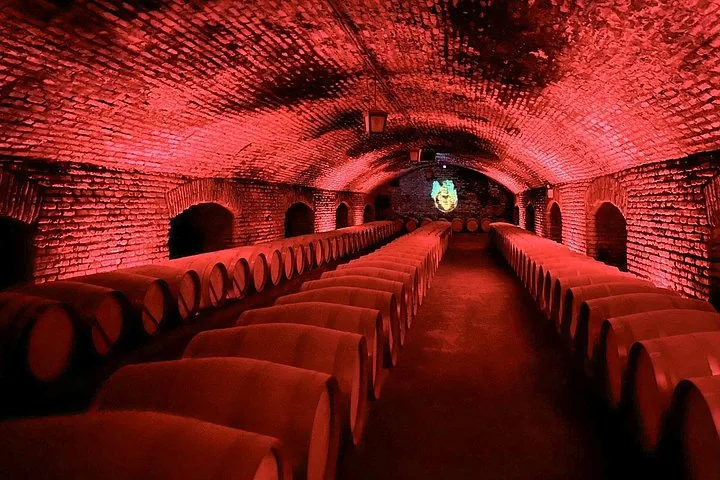
To taste it at a winery with one of the longest Cabernet histories in the valley, the Cousiño Macul private tour with premium tasting below collects you from your Santiago hotel for a vineyard walk, the original 1887 cellars and a tasting.
Check Availability
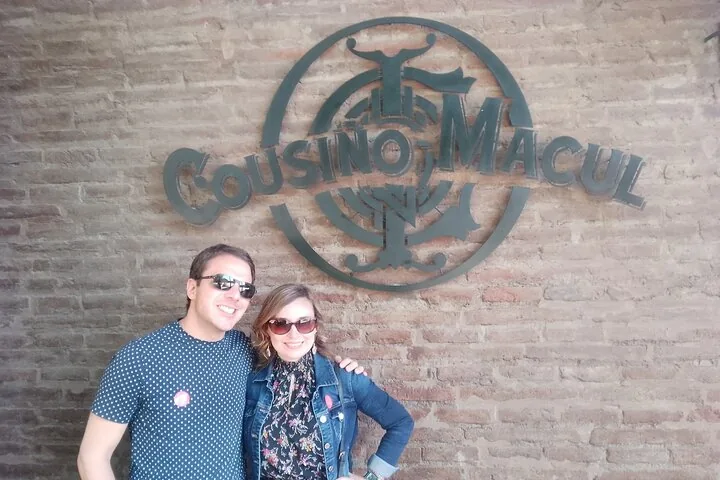
Cousiño Macul Private Winery Tour with Premium Tasting
- 4.9/5 (75 reviews)
- 4 hours
- Free cancellation
- Operated by THE EMPIRE VASQUE TOUR
Includes Private round-trip transfer — hotel pickup and drop-off in an air-conditioned minivan, for your party only. · Winery …
You'll choose your date and complete the booking on Viator. Free cancellation up to 24 hours before departure.
Why is Cabernet Sauvignon so important in Chile?
Cabernet Sauvignon is not just one of the grapes grown in Chile: it is the country’s most widely planted wine grape. Official Chilean agricultural figures based on the 2023 vineyard census recorded about 34,645 hectares of Cabernet Sauvignon, around 27.8% of Chile’s wine-grape vineyard area, well ahead of Sauvignon Blanc, País, Merlot, Carménère and Chardonnay.
Its importance goes beyond acreage. For much of the modern era of Chilean wine, Cabernet has been one of the grapes used to show that the country can make fine, cellar-worthy wines and not only inexpensive, fruit-forward bottles. Nowhere is that story more closely tied to a place than in the Maipo Valley.
Why does Cabernet Sauvignon grow so well in Maipo Valley?
The short explanation is that Maipo gives Cabernet the combination it likes most: plenty of sunshine, fairly dry summers, enough heat to ripen the grapes properly, cool nights that slow the ripening, poor, free-draining soils and a long growing season. The more interesting explanation is how the Andes and the Maipo River work together.
1. The Andes cool the vineyards at night
Many of Maipo’s most famous vineyards sit on the eastern side of the valley, close to the Andes. Warm, bright days help Cabernet develop color, tannin and ripe fruit; at night, cold air flows down from the mountains and the temperature drops sharply. That day-to-night swing is one of the signatures of the area.
In Puente Alto, the vineyards behind Almaviva sit at about 650 meters above sea level, and the winery names the cold Andean breezes and the large gap between day and night temperatures as key to the slow, even ripening of its grapes. That matters for Cabernet in particular. The grape needs enough heat to ripen its tannins, but too much warmth can make heavy, jammy wines with less freshness. Maipo can give you ripeness without automatically giving you heaviness.
2. The soils are full of stones and gravel
Over a very long time, the Maipo River has carried material down from the Andes, leaving alluvial terraces of gravel, stones, sand, silt and clay. These soils are often poor in nutrients and drain quickly. That sounds bad if you are growing vegetables, but for premium wine grapes it can be a real advantage.
Vines in low-fertility soils do not put all their energy into lush leaves and huge crops. Their roots are pushed deeper in search of water, and smaller berries give a high proportion of skin to juice. Cabernet’s color, its tannins and many of its flavor compounds come mostly from those skins. Decanter describes the gravel terraces left by Andean rivers in Maipo as especially well suited to Cabernet Sauvignon, with good drainage and access to water through the sunny, dry summers. At Almaviva’s Puente Alto vineyard, the soil has loamy clay near the surface with sand, gravel and rocks beneath it, so it drains well.
3. Summers are dry and sunny
Maipo has a Mediterranean-style climate, so most of the rain falls in winter, not in the growing season. Puente Alto, for example, averages about 300 mm of rainfall a year, much of it in winter, and the summers are comparatively dry. That reduces some of the fungal disease pressure of wetter wine regions and gives growers a lot of control over ripening.
Water still matters enormously, more so in drought years, and irrigation has long played an important part in Chilean viticulture. But fundamentally, Cabernet here grows under a great deal of sunshine.
Other Experiences
Other experiences you might enjoy
More Maipo Valley wine tours, each with its own page and booking link.

What does Maipo Valley Cabernet Sauvignon taste like?
No single flavor profile fits every bottle, but classic Maipo Cabernet usually falls somewhere on this spectrum:
| Character | What you may notice |
|---|---|
| Fruit | Blackcurrant, blackberry, black cherry, plum |
| Fresh and herbal notes | Mint, eucalyptus-like freshness, dried herbs |
| Spice | Black pepper, clove, baking spice |
| Earthy and mineral notes | Graphite, stone, earth |
| Oak-aged wines | Cedar, tobacco, vanilla, toast |
| Structure | Medium to full body, firm tannins, refreshing acidity |
| With age | Tobacco, cedar, leather, dried fruit and savory notes |
One of the most recognizable traits of good Maipo Cabernet is the tension between ripe black fruit and something cooler or more savory. That might be mint, dried herbs or graphite, or simply a freshness that stops the wine tasting sweet or overripe.
Cousiño Macul, for example, describes its old-vine Jardín de Macul Cabernet as showing minty and earthy notes alongside spice and ripe fruit; the wine comes from a Cabernet parcel planted in Macul in 1932, at the foot of the Andes. A Maipo Cabernet from Volcanes de Chile is described with currant, raspberry and black cherry alongside laurel, cedar, menthol, smoke and graphite, a useful snapshot of the wider style.
Is Chilean Cabernet Sauvignon dry?
Yes. Almost all serious Chilean Cabernet Sauvignon is dry. The ripe black-fruit flavors can make Cabernet seem slightly sweet even with very little residual sugar, especially in warmer-climate versions. But when you order a Cabernet at a Maipo winery tasting, expect a dry red wine with noticeable tannin, not a sweet one.
Is Maipo Cabernet heavy?
Sometimes, but the best examples are usually more balanced than simply “big.” Entry-level Chilean Cabernet can be soft, ripe and easy to drink. More serious Maipo wines add firmer tannin, acidity, herbal freshness and more concentration. Upper Maipo Cabernet in particular can be powerful without feeling syrupy, and that is one of the reasons the region has such a strong reputation.
The part of Maipo that matters most: Alto Maipo
You will often see the name Alto Maipo, or Upper Maipo. It generally means the higher, eastern parts of the valley toward the Andes, not a separate valley. In Chile’s official wine geography, the Maipo Valley includes recognized areas such as Santiago, Pirque, Puente Alto and Buin, and SAG, the national agricultural authority, formally places them within the Maipo Valley wine subregion. For Cabernet lovers, three names are especially useful.
Puente Alto
If you remember one place name, make it Puente Alto. Decanter calls it one of Chile’s most celebrated Cabernet terroirs and highlights three famous properties tied to it: Don Melchor, Almaviva and Viñedo Chadwick. Here you find high vineyards, stony alluvial soils, a strong Andean influence, large day-night temperature swings and some of Chile’s most expensive and age-worthy wines. For wine enthusiasts, Puente Alto plays a role something like a prized subzone within a larger famous region: a bottle labeled simply Maipo Valley tells you something useful, and a bottle from Puente Alto tells you more.
Pirque
Pirque, southeast of central Santiago, combines striking Andes scenery with some of the valley’s best-known wineries. It matters to visitors above all because Concha y Toro is here. The area also makes serious Cabernet: Familia Torres uses Cabernet from the Andean sector of Pirque for its Cordillera Cabernet Sauvignon, citing the stony alluvial soils and the large day-night temperature swings. If you want a straightforward winery trip from Santiago, Pirque is one of the easiest places to build a day around. See Concha y Toro tours from Santiago.
Alto Jahuel
South of Santiago near Buin, Alto Jahuel is another major Cabernet location and the home of Santa Rita, whose flagship Casa Real Cabernet Sauvignon comes from a historic 20-hectare vineyard here. The current Casa Real is made from 100% Cabernet Sauvignon, and Santa Rita describes Alto Jahuel as one of the world’s great terroirs for the grape. For visitors who want both serious wine and Chilean history, Santa Rita is especially compelling.
Why Puente Alto has become so famous
Puente Alto’s reputation did not come from nowhere: it has a remarkable concentration of prestige wines.
Don Melchor
Concha y Toro’s flagship Don Melchor comes from Puente Alto and is based mainly on Cabernet Sauvignon. The vineyard is made up of separate Cabernet parcels that are vinified and assessed one by one before the final wine is assembled, and Concha y Toro roots its identity in Puente Alto’s alluvial soils and the influence of the Andes. The first vintage was 1987, and Concha y Toro regards it as Chile’s first icon wine. Even if you never buy a bottle, Don Melchor matters because it helped make Puente Alto a name international collectors recognize.
Almaviva
Almaviva is another Cabernet-dominated Puente Alto wine. Its vineyard sits at about 650 meters at the foot of the Andes, with Cabernet Sauvignon planted alongside smaller amounts of Carménère, Cabernet Franc, Merlot and Petit Verdot. That makes it a good example of the Bordeaux-style blending tradition that exists alongside single-variety Cabernet in Maipo.
Viñedo Chadwick
Viñedo Chadwick is another benchmark name closely tied to Puente Alto. Together with Don Melchor and Almaviva, it makes a useful point for travelers: Chile’s most famous Cabernet territory is surprisingly close to Santiago. You do not have to drive for hours into rural wine country to reach vineyards that make world-class reds.
Cabernet Sauvignon’s long history in Maipo
Cabernet Sauvignon is not native to Chile. In the 19th century, wealthy Chilean landowners began importing French grape varieties, particularly from Bordeaux: Cabernet Sauvignon, Cabernet Franc, Merlot, Carménère and Petit Verdot. Crucially, some of this vine material arrived before phylloxera devastated Europe’s vineyards later in the century.
Cousiño Macul is a clear example. Matías Cousiño bought Hacienda Macul in 1856, and the family went on to bring Cabernet Sauvignon and Merlot from Pauillac in Bordeaux to plant the vineyard. The founding family still controls the estate, with the sixth generation leading the company and the seventh already involved, and its historic Antiguas Reservas Cabernet Sauvignon traces its origins to the 1927 harvest. So when people call Maipo Chile’s traditional Cabernet heartland, it is not just modern marketing: the relationship goes back well over a century. Cousiño Macul winery tours covers the ways to visit.
Is Cabernet Sauvignon Chile’s signature grape?
This question causes plenty of confusion, and two statements are both true: Carménère is Chile’s emblematic grape, and Cabernet Sauvignon is its most planted wine grape.
Carménère has an unusually strong national story, because vines once mistaken for Merlot were eventually identified as Carménère, a Bordeaux grape that had all but disappeared from its European homeland. Cabernet Sauvignon, however, covers far more vineyard land in Chile and has long been at the center of many of the country’s most prestigious wines.
So if someone asks “What wine is Chile most famous for?”, Carménère is a reasonable answer. If they ask “What is Chile’s most important red grape by vineyard area?”, the answer is Cabernet Sauvignon. And if they ask “Where should I go in Chile for Cabernet Sauvignon?”, the Maipo Valley should be near the top of the list.
Maipo Cabernet vs Carménère: which should you try?
Ideally, both. They show very different sides of Chilean red wine.
| Cabernet Sauvignon | Carménère | |
|---|---|---|
| Typical fruit | Blackcurrant, blackberry | Plum, blackberry, black cherry |
| Herbal character | Mint, dried herbs | Green pepper, herbs |
| Structure | Firmer tannins | Usually softer tannins |
| Body | Medium-full to full | Medium-full |
| Importance in Maipo | Exceptional | Also widely grown |
| Identity in Chile | The historic prestige grape | The emblematic national grape |
If you are visiting wineries, a tasting that puts the two side by side is especially useful: you quickly see that Chilean red wine is not one style. Our guide to what to drink in the Maipo Valley covers Carménère, Syrah, Merlot and the blends in more depth.
Maipo Cabernet vs Bordeaux Cabernet
The comparison makes sense, because the grape itself and much of Chile’s early fine-wine tradition came from Bordeaux. But the wines are not copies.
- Maipo often gives you more immediate ripe fruit, sunnier blackcurrant and blackberry character, distinctive mint or herbal notes, a generous texture, clearly defined tannin and Andean freshness.
- Bordeaux may give you more restrained fruit in cooler vintages, more emphasis on savory, earthy or graphite notes, bigger differences from one vintage to the next and more reliance on blending Cabernet with Merlot and the other Bordeaux grapes.
Premium Chilean producers blend too, of course, and Almaviva is a good example. But many of Maipo’s benchmark wines put Cabernet Sauvignon unmistakably at the center.
Maipo Cabernet vs Napa Cabernet
Broadly speaking, Napa Cabernet often feels riper, richer, higher in alcohol and more opulent, while classic Maipo Cabernet often feels fresher, more herbal, more restrained and more mineral or savory. That is a huge generalization, and producers and sites vary enormously, but it gives first-time drinkers a useful starting point. If you enjoy Napa Cabernet but sometimes wish it had a little more freshness and less sweetness of fruit, good Maipo Cabernet is worth exploring.
What are the best wineries for Cabernet Sauvignon in Maipo Valley?
For visitors, as opposed to collectors, we would start with wineries where the Cabernet story is both strong and easy to understand on the spot. The best wineries in Maipo Valley compares ten estates in more detail.
1. Concha y Toro
Best for: first-time visitors and one of Chile’s most famous wine names
Founded in Pirque in 1883, Concha y Toro is deeply tied to the history of Cabernet in Maipo, with a range that runs from widely distributed wines to Don Melchor, one of Chile’s benchmark prestige Cabernets. Choose it for a polished visitor experience, historic cellars, the Casillero del Diablo story, a major Chilean brand and an easy fit with other Santiago sightseeing.
Worth knowing: the standard winery tour and tasting is not the same as a dedicated Don Melchor experience, so check exactly which wines are included before you book. The Marqués de Casa Concha tasting, for example, pours six super-premium Marqués de Casa Concha wines and four premium wines and walks past the outside of Casa Don Melchor; it is from $135 with 4.9 from 1,223 Viator reviews.
2. Santa Rita
Best for: wine, history and a longer winery visit
Santa Rita is based at Alto Jahuel and makes one of Maipo’s classic icon Cabernets, Casa Real. A visit is about more than tasting: the property combines historic buildings, gardens and Chilean cultural history with the winery. Choose Santa Rita if you want your wine day to feel like an excursion, not a quick tasting. The Santa Rita vineyard tour with lunch goes from Santiago for a tasting of two Reserva wines and one Gran Reserva, a three-course lunch and the Andean Museum, from $207 with 4.8 from 426 Viator reviews.
3. Cousiño Macul
Best for: history and a winery close to central Santiago
Cousiño Macul is an especially good choice if you want a strong Cabernet story without traveling deep into the countryside. Founded in 1856, it is still connected to the founding Cousiño family and keeps vineyards in the Andean foothills of Santiago, and its history with Cabernet is unusually deep, including the Antiguas Reservas line first made from the 1927 Cabernet harvest. The winery’s own Premium Tour in English adds a seated tasting of three more wines to the cellar walk, from $45 with 5.0 from 186 Viator reviews; it has no transport, while the private tour with premium tasting includes hotel pickup from $90 (4.9 from 75 Viator reviews).
4. Smaller Maipo producers
Do not assume the biggest winery always gives the most interesting tasting. Smaller estates can offer more direct contact with winemakers, quieter tastings, small-production Cabernet, native-yeast or lower-intervention wines and more detailed talk about individual vineyard sites. For experienced wine travelers, one famous estate and one small producer can make a better day than three big brands.
Which Maipo Cabernet should you taste?
You do not need to jump straight to an expensive icon wine. A useful tasting progression:
- A young or entry-level Maipo Cabernet shows you the grape’s basic fruit: blackcurrant, blackberry and straightforward tannin.
- A Reserva or Gran Reserva Cabernet usually adds more concentration, oak, spice, cedar and firmer structure.
- A single-vineyard or premium Cabernet is where the site’s character gets easier to spot: graphite, herbs, mint, more detailed tannin and a longer finish.
- An icon Cabernet, if your budget allows. The key difference should not simply be “more oak” or “more power”: the best offer more precision, complexity, balance and length.
Don’t judge Cabernet only by price
Chile has long been strong at making Cabernet at several price levels, so a bottle costing a fraction of an icon wine can still show clear Maipo character. If you are traveling to learn, not to collect, tasting three price levels side by side may teach you more than spending the whole tasting budget on one famous bottle. Ask the host:
“Can I compare a regular Maipo Cabernet with your premium or single-vineyard Cabernet?”
That one comparison can teach you more about Chilean Cabernet than working through a list of unrelated wines.
When is the best time to visit Maipo for Cabernet Sauvignon?
Maipo wineries are open all year, but the experience changes with the season.
February to April, the harvest. This is the most exciting time if you want to see winemaking in action. Cabernet ripens fairly late, so depending on the vineyard and the vintage you may find Cabernet being picked toward the later part of the harvest. Expect ripe grapes on the vines, harvest crews, busy wineries, warm days and more visitors. Exact dates vary every year: Santa Rita’s 2023 Casa Real, for example, was harvested between February 8 and March 8, a sign that even one premium Cabernet can be picked over several weeks, section by section, as each part ripens.
October to December, green vineyards and pleasant weather. Spring and early summer are excellent if scenery matters. The vines are green, the Andes are often still striking behind them, and temperatures are generally easier for outdoor tastings than at the height of summer.
May to August, quieter but less picturesque. In winter the vines are dormant and mostly bare. In return it is generally quieter, the weather is cooler and the barrel cellars feel atmospheric. If your priority is the wine and not vineyard photos, winter can work perfectly well.
What food goes with Maipo Cabernet Sauvignon?
Cabernet’s tannin and concentration make it comfortable beside rich, savory food, and in Chile the obvious pairing is beef. Try it with grilled steak, asado, lamb, slow-cooked beef, empanadas de pino, mushroom dishes and mature hard cheeses. Concha y Toro’s restaurant pairs Don Melchor with grilled meat and Angus ribeye, and Cousiño Macul recommends its Cabernet with dishes such as roast lamb and other rich meats.
Vegetarians need not miss out. Cabernet works with food that has enough umami, fat or smoky flavor to stand up to its tannins: grilled portobello mushrooms, mushroom risotto, roasted eggplant, lentil dishes and aged cheeses.
What temperature should Chilean Cabernet be served at?
Not at warm room temperature. A good target is about 61 to 64°F (16 to 18°C); Viña Maipo, for example, recommends about 63°F (17°C) for its Cabernet Sauvignon. If your bottle has been sitting in a warm Santiago room in summer, 15 to 20 minutes in the refrigerator before serving helps a great deal.
Should you decant Maipo Cabernet?
For younger premium Cabernet, often yes: a young, tannic wine can open up noticeably after 30 to 90 minutes of air. Older bottles need more care. Decanting can remove the sediment, but fragile aged aromas can fade if the wine is left exposed for too long. At a winery tasting, the staff will normally serve each wine the way it suits it.
Can Maipo Cabernet age?
The better examples certainly can. Cabernet Sauvignon has the traits that make long aging possible: substantial tannin, good acidity, concentrated fruit and an affinity for oak. Top Maipo Cabernets can develop for many years, even decades, when stored correctly, with the fresh black fruit gradually moving toward cedar, tobacco, leather, dried herbs and earthy notes. Not every bottle needs aging, though: most inexpensive and mid-priced Chilean Cabernet is made to be enjoyed fairly young.
Can you visit Maipo Valley from Santiago in one day?
Yes, easily. This is one of Maipo’s biggest advantages over many major wine regions: several winery areas sit inside or just beyond greater Santiago. You can realistically visit one winery in half a day, visit two comfortably in a full day, combine a winery with lunch or take a private wine tour without changing hotels. For most first-time visitors, two wineries in a day is enough. Three is possible, but it often turns the day into a timetable. Maipo Valley wine tours from Santiago compares every way to do it.
Should you visit independently or take a wine tour?
Take a tour if everyone wants to taste, you do not speak Spanish, you want to visit several wineries, you would rather not plan the transport or you want context on Chilean wine between stops. Go independently if you are visiting only one winery, you are comfortable arranging taxis or transfers, someone is not drinking or you want maximum flexibility.
The strongest argument for a tour is not necessarily the guide. It is not having to drive after tasting wine.
What should Cabernet lovers ask when booking a Maipo wine tour?
Many tours promise “Maipo Valley wine tasting” without saying which wines you will taste. If Cabernet is the reason you are going, ask:
- Which wineries are included?
- Will we taste Cabernet Sauvignon?
- Is any premium or reserve Cabernet included?
- How many wines are tasted at each winery?
- Is the tasting private or shared?
- Does the visit include the vineyards, or only the cellar and tasting room?
- Is lunch included?
- Are hotel transfers included?
A tour that visits Maipo does not automatically mean a Cabernet-focused tasting, so confirm it before you pay.
Is Maipo Valley worth visiting if you are not a wine expert?
Yes. Cabernet Sauvignon actually makes Maipo easy for beginners, because you can build a simple question around it: how does the same grape change between vineyards and price levels? Taste Cabernet at two wineries and compare the fruit, the mint or herbal notes, the tannin, the oak, the body and the finish. You do not need to identify twenty aromas; simply deciding which one you prefer and why is enough.
Best Maipo Cabernet experience for different travelers
| Traveler | Best approach |
|---|---|
| First winery visit | Concha y Toro and a guided tasting |
| Serious Cabernet fan | Focus on Alto Maipo and Puente Alto wines |
| History lover | Santa Rita or Cousiño Macul |
| Short on time | One winery close to Santiago |
| Couple wanting a relaxed day | A private tour, two wineries and lunch |
| Wine enthusiast | One major producer and one boutique producer |
| Collector | Tastings with premium or single-vineyard Cabernet |
Cabernet Sauvignon in Maipo: quick facts
- Where is the Maipo Valley? Around and south of Santiago, stretching toward the Andes.
- What grape is Maipo most famous for? Cabernet Sauvignon.
- What does Maipo Cabernet taste like? Typically blackcurrant and blackberry with firm tannins and fresh herbal, minty, cedar or graphite notes.
- What is the most famous Cabernet area in Maipo? Puente Alto is especially prestigious.
- Which famous wines come from Puente Alto? Don Melchor, Almaviva and Viñedo Chadwick are among the best known.
- Is Cabernet Sauvignon native to Chile? No. It arrived from France in the 19th century.
- Is Cabernet or Carménère more important in Chile? Cabernet Sauvignon is far more widely planted; Carménère is regarded as Chile’s emblematic grape.
- Can you visit Maipo from Santiago? Yes. It is one of the easiest major Chilean wine regions to visit as a day trip from the capital.
The bottom line
If you drink only one grape in the Maipo Valley, make it Cabernet Sauvignon. Not because it is rare (it grows across much of the wine world), but because of how clearly a familiar grape expresses this particular landscape. The combination of Andes-cooled nights, sunny summers and stony alluvial soils gives Cabernet enough ripe black fruit to feel generous, and enough tannin, freshness and herbal character to stay recognizably Maipo. At the top end, especially around Puente Alto, that formula produced some of the wines that established Chile’s modern fine-wine reputation.
For travelers, the bonus is geography. This is not a remote wine region that needs its own leg of the trip: you can have breakfast in Santiago, spend the afternoon among Cabernet vines at the foot of the Andes and be back in the city for dinner.
Frequently asked questions
Why is Maipo Valley famous for Cabernet Sauvignon?
Maipo combines dry, sunny summers, large day-to-night temperature swings caused by the Andes and free-draining alluvial soils laid down by the Maipo River. Together they help Cabernet ripen fully while keeping its acidity, tannin structure and freshness.
Is Maipo Valley the best Cabernet Sauvignon region in Chile?
“Best” is subjective, and excellent Cabernet is now made in several Chilean regions. But Maipo is the country’s historic benchmark for Cabernet Sauvignon, and Puente Alto in particular is tied to several of Chile’s most prestigious Cabernet-based wines.
What is Alto Maipo?
Alto Maipo is the higher, eastern part of the Maipo Valley, closest to the Andes. Areas such as Puente Alto and Pirque benefit from the altitude, the mountain breezes and the large gap between day and night temperatures.
What is the difference between Maipo Cabernet and Chilean Carménère?
Cabernet generally has firmer tannins and flavors centered on blackcurrant, blackberry, cedar and mint. Carménère often feels softer and can show plum, dark berries, herbs, pepper and spice.
Is Maipo Cabernet similar to Napa Cabernet?
Both can be ripe and full-bodied, but classic Maipo Cabernet often shows more herbal, minty or graphite notes and can feel fresher and less opulent than many Napa examples.
Is Maipo Cabernet expensive?
It can be, but it does not have to be. Maipo makes everything from inexpensive everyday Cabernet to internationally collectible icon wines.
Which wineries near Santiago are good for Cabernet Sauvignon?
For visitors, Concha y Toro, Santa Rita and Cousiño Macul are strong starting points, because each combines a significant Cabernet history with well-established visits.
Can I visit Puente Alto vineyards?
It depends on the estate. Some of the most prestigious vineyards are not drop-in tourist attractions, so check with the specific winery or book a suitable specialist tour instead of assuming every famous vineyard offers public tastings.
What food should I eat with Chilean Cabernet?
Grilled beef is the classic pairing, but lamb, empanadas, slow-cooked meat, mushrooms and mature cheeses also work very well.
What is the best time of year for a Maipo Cabernet tour?
For active vineyards and harvest atmosphere, February to April is the most interesting period. For green vines and pleasant sightseeing weather, spring into early summer, roughly October to December, is excellent.
Ready to taste it? Maipo Valley wine tours from Santiago compares every way to get to the wineries, Cousiño Macul winery tours covers the estate at the top of this page, and Concha y Toro tours from Santiago covers the home of Don Melchor.
Spend the Day in the Maipo Valley
Free cancellation up to 24 hours before. Cousiño Macul Private Winery Tour with Premium Tasting from $90 per person.
Check Availability & Book